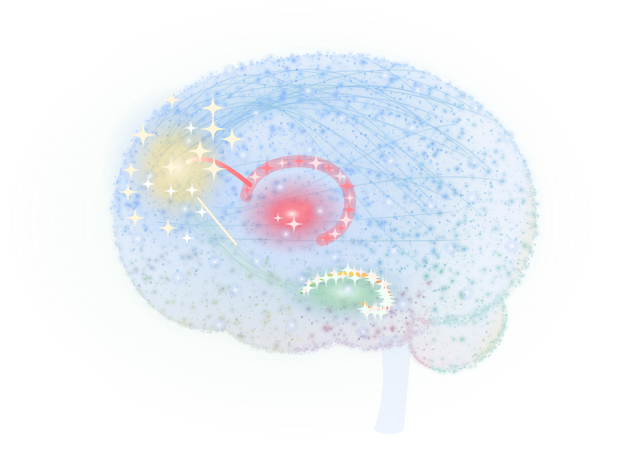
Memory & hippocampus
The hippocampus forms new memories and, during sleep, hands them to the cortex to keep. Exercise, sleep and writing things down all help it.
Neighboring concepts: Synapses & plasticity · Sleep & rhythm · Brain immunity & gut · Full knowledge map
Posts on this concept 16
-
What's the Surest Way to Raise BDNF? A Year of Exercise Grew the Hippocampus 2%
Every human activity linked to BDNF, the brain's fertilizer, checked against studies in PNAS, Nature, Cell and eLife: exercise, dance, learning, reading, meditation, sleep, sunlight, food and meal timing. We rate the strength of the evidence, show how long each takes to work, and illustrate how the brain actually changed.
17 min read Read % read -
How Do Magnesium Types Differ? Magnesium Oxide Absorbed Only 4%
How well magnesium is absorbed, and what it is good for, depends on the molecule it is paired with. In one study only about 4% of magnesium oxide was absorbed, while magnesium citrate was absorbed best of the forms compared (Magnesium Research, 2001 and 2003). Here is the path each form takes in the body, and what the upper limit set by the US National Institutes of Health (350 mg a day from supplements) means.
18 min read Read % read -
Why Does Memory Hold Up in Some Aging Brains? An Enzyme Switches On With Age
In people whose memory stays sharp with age, a fat-breaking enzyme called PLA2G2F was more active. Drawing on an October 2026 Nature Neuroscience study, we explain how the hippocampus's 'backup generator' protects memory, and lay out a three-step habit for looking after your hippocampus starting today.
8 min read Read % read -
A Year of Walking Made the Hippocampus Grow
In a randomized trial of 120 older adults, those who did aerobic walking for a year saw the hippocampus, the brain's memory hub, grow by about 2%. How exercise changes the brain, and how to put it into practice after work.
7 min read Read % read -
While You Sleep, Your Brain Sorts the Day's Memories
During deep sleep, the hippocampus and the cerebral cortex replay what you learned during the day and move it into long-term memory. Why you shouldn't cut sleep on days you study or learn something new.
9 min read Read % read -

Which Hobbies Slow Brain Aging? Piano Helped, but Language Classes Didn't
New, slightly challenging hobbies can improve some cognitive skills even later in life. Older adults who learned piano for six months improved on tests of attention switching and processing speed (Aging & Mental Health, 2007). But older adults who took language classes for 11 weeks showed no change in memory (Psychology and Aging, 2020). For lowering dementia risk, overall lifestyle, including social contact, hearing, and exercise, mattered more than any single hobby (Lancet, 2024).
8 min read Read % read -
Does Focusing on the Muscle Make It Grow More? Arm Muscles Grew Nearly Twice as Much
Focusing on a muscle while training could make that muscle grow more. People who focused on 'squeezing the muscle' for 8 weeks grew their arm muscles nearly twice as much as those who focused on 'lifting the weight' (European Journal of Sport Science, 2018). But for performance, like jumping high or lifting heavy, focusing outside the body worked better. Summarized with research on learning through the body and my experience of getting hurt at the gym.
9 min read Read % read -
Does Self-Talk Change If You Use Your Own Name? Emotional Reactions Dropped Within a Second
Using your own name instead of 'I' in self-talk made people less swept up in emotion. When people talked to themselves by name while viewing unpleasant images, the brain's emotional response dropped within a second, and the frontal areas used for effortful control didn't work harder (Scientific Reports, 2017). Words read aloud were remembered better than words read silently (JEP: Learning, Memory, and Cognition, 2010). I corrected the wrong citations and exaggerated explanations in the earlier version of this post.
8 min read Read % read -
Does Holiday Weight Really Come Off? Half of It Was Still There Five Months Later
Holiday weight didn't all come off on its own. Weight records from people in three countries showed that about half the weight gained over the holidays was still there five months later (NEJM, 2016). Much of the weight lost in the first few days after a holiday is water stored with glycogen. I kept my experience of using a carnivore diet after the Chuseok holiday, but corrected risky parts, like taking magnesium until you get diarrhea.
10 min read Read % read -
Does Tracking Your Time Change Habits? People Used Their Phones Twice as Much as They Thought
Logging your day turns drifting time into numbers, and from there habits became easier to change. People used their phones about 5 hours and 85 times a day but estimated about half that (PLoS ONE, 2015). The more consistently people recorded, the better they reached goals like weight loss. I corrected the comparison in the earlier version of this post to the quantum observer effect, and summarized my experience of changing my days through time tracking alongside the research.
11 min read Read % read -
Does a Tidy Room Help You Focus? A Messy One Produced More Original Ideas
A tidy space helped focus, while a slightly messy one helped new ideas. People in a tidy room chose apples and donated more; people in a messy room came up with more original ideas (Psychological Science, 2013). A smartphone on the desk reduced working memory just by being there. Prompted by Raemian Gallery's 'A Part of Home' exhibition and talks, here is what research says about how space shapes the brain's focus.
9 min read Read % read -

Is Running Good for Your Brain? Just 10 Minutes Sharpened Focus
Ten minutes of moderate running lifted mood and focus and activated the prefrontal cortex (Scientific Reports, 2021); meta-analyses show exercise raises BDNF, the brain's fertilizer; and a year of aerobic exercise enlarged the hippocampus (PNAS, 2011). Here is why running helps the brain, and three steps for beginners to start without getting hurt.
12 min read Read % read -
Why Do Memories Change? The Ones You're Surest of Can Be Wrong
Because memories are rebuilt each time we recall them. Drawing on a study where 9/11 memories changed within months while confidence stayed put (Psychological Science, 2003) and an experiment where one word in a question changed memory, here is how it works, and three steps for why writing things down is the most reliable reference.
10 min read Read % read -
Can Adult Brains Still Grow? Three Months of Study Enlarged Medical Students' Hippocampi
Yes, the brain changes throughout life. Here is the research: medical students' hippocampi grew while studying for an exam (J Neurosci, 2006), exercise started in one's 60s increased brain volume, and therapy that changes thinking changed brain circuits, plus the open debate over new neurons in adult brains.
10 min read Read % read -
How to Boost Neuroplasticity: The Hippocampus Changed in Just 2 Hours
The best-supported ways are moving your body, sleeping enough, and seeking out new experiences. Here is the research on running and new neurons (Nature Neuroscience, 1999) and sleep and synapses (Science, 2014), plus how far the evidence on gut health really goes.
11 min read Read % read -
What Is Neuroplasticity? Three Months of Juggling Changed Adult Brains
Adult brains do change. Three months of juggling grew gray matter (Nature, 2004), and older adults who learned new skills improved their memory. Here is what neuroplasticity research shows, and 3 steps to change your brain with new habits.
8 min read Read % read
No posts here yet.