You stopped at last time.
The story in four panels
Magnesium: the form decides the path
-
1The situation
I take magnesium, so why no change…
Two labels can both say '300 mg magnesium', yet how much your body takes in varies widely by form.
-
2How it works
Pass, please
Magnesium oxide stays in the gut and draws in water; citrate and chelates dissolve and cross the gut wall.
-
3What to do
A different path for each form
Oxide stays in the gut, citrate is well absorbed, and glycinate is gentle on the gut. And magnesium is plentiful in food, too.
-
4The change
Factory switch: on!
Bound to ATP, magnesium switches on more than 600 enzymes. The cell's day starts running again.
The comic in words
- Panel 1 · The situation PictureA person slumped at a desk with an empty battery Speech bubble“I take magnesium, so why no change…”
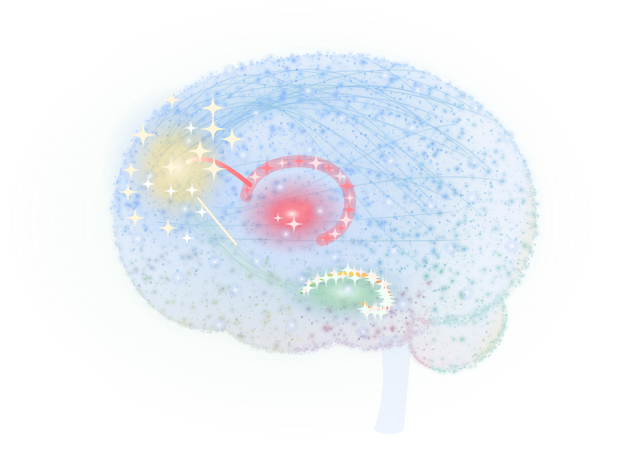
- Panel 2 · How it works PictureA pathway linking the gut and the brain Speech bubble“Pass, please”
- Panel 3 · What to do PictureA meal laid out on a table Speech bubble“A different path for each form”
- Panel 4 · The change PictureA person deep in focus with a flash of insight Speech bubble“Factory switch: on!”
📌 Key takeaways
The short answer: It differs by form. The same magnesium is absorbed very differently depending on the molecule it’s paired with: in one study only about 4% of magnesium oxide was absorbed, while magnesium citrate was absorbed better. Because so little magnesium oxide is absorbed, it stays in the gut and has long been used as a laxative, while glycinate is known as a form that is gentle on the gut. Magnesium is plentiful in food, and the US National Institutes of Health has set the adult upper limit for magnesium from supplements at 350 mg a day.
- 🔋 Magnesium does its work by binding to ATP, the cell’s energy currency, to form Mg-ATP. More than 600 enzymes depend on it (Physiological Reviews, 2015). It is the cell factory’s main switch, and Nature (2016) showed that magnesium inside cells rises and falls on a daily cycle, tuning how fast cells spend energy.
- 🚢 The same magnesium is absorbed very differently depending on the molecule it’s paired with. In one study, magnesium oxide had a fractional absorption of only about 4% (Magnesium Research, 2001), while magnesium citrate was the best absorbed of the forms compared (Magnesium Research, 2003).
- 🧠 Magnesium L-threonate raised brain magnesium in rats, increased synapses in the hippocampus, and improved learning and memory (Neuron, 2010). Human studies, however, are still small.
- ⚖️ Magnesium supplementation tended to improve markers of insulin sensitivity (a 2016 meta-analysis of randomised controlled trials), and magnesium is also an essential helper for the enzymes that make glutathione, which is linked to skin tone.
- 😴 Magnesium acts as a brake for sleep, locking excitatory signals and helping calming ones. One analysis found it shortened the time to fall asleep by about 17 minutes on average in older adults with insomnia, though the evidence is still low quality (BMC Complementary Medicine and Therapies, 2021).
💬 Does this sound familiar?
One day, after months of saying you’re always tired, someone suggests: “Try magnesium.” At the pharmacy shelf there’s a whole line of names: oxide, citrate, glycinate, even L-threonate. You pick the cheapest one with the highest dose and take it for a month. The fatigue stays; you just visit the bathroom more often. And you think: maybe magnesium just doesn’t work for me.
In fact, the problem was quite possibly not magnesium but its form. This post is about where each of those labels goes once it’s inside you.
🔬 Deep Dive: how magnesium reaches your cells
1. The factory’s main switch: Mg-ATP
Every cell in the body works on an energy currency called ATP. But ATP on its own can barely be used. Only when a magnesium ion binds to it, forming the Mg-ATP complex, do enzymes recognise it and draw energy out. Magnesium is less the electricity itself than the main switch that connects the electricity to the machines.
More than 600 enzymes need this switch (de Baaij et al., Physiological Reviews, 2015). Muscle contraction and relaxation, nerve signalling, copying DNA and building proteins all pass through it.
A 2016 study in Nature went a step further. In both human cells and single-celled algae, magnesium levels inside the cell rose and fell on a daily cycle, and with them the rate at which cells spent energy and built proteins (Feeney et al., 2016). Magnesium turned out to be not just a switch but also a dimmer that sets the rhythm of the day.
2. The partner decides the fate: inorganic salts, organic salts and chelates
Magnesium can’t go into a tablet on its own, so it always comes paired with another molecule. That partner decides what happens in the gut. Picture magnesium as cargo, and the partner as the ship carrying it: the type of ship determines how it reaches the harbour, the cells lining your intestine.
🪨 Inorganic salts (magnesium oxide and others): a freighter anchored outside the harbour Magnesium oxide packs a lot of magnesium into each tablet, but it dissolves poorly in water. Undissolved magnesium can’t cross the gut wall; it stays in the intestine and pulls in water by osmosis. That softens stools, which is why it has long been used as a laxative. In a comparison of US commercial products, magnesium oxide’s fractional absorption was only about 4% (Firoz & Graber, 2001). It falls short for topping up your body’s stores, but it does its job of getting the gut moving.
🍋 Organic salts (magnesium citrate, gluconate, malate and others): ships that dissolve and sail into port Magnesium paired with organic acids such as citric or malic acid dissolves readily in water. Magnesium has to dissolve into ions before it can pass through channels in the gut lining, so solubility is the first gate to absorption. In a randomised, double-blind study, magnesium citrate raised blood and urine magnesium more than magnesium oxide or an amino acid chelate (Walker et al., Magnesium Research, 2003).
Magnesium gluconate is another leading member of this group. Paired with gluconic acid, which is made from glucose, it dissolves very readily in water, much like citrate, and is relatively less likely to irritate the stomach or cause a laxative effect such as diarrhoea, which is why it is often used in liquid and powder products. In a stable-isotope study comparing ten organic and inorganic salts in magnesium-depleted rats, magnesium gluconate showed the highest bioavailability (Coudray et al., Magnesium Research, 2005). Think of it as a fast boat that carries a light load and slips quickly into port. Its elemental magnesium content by weight is low, though, at about 5–6%, so you need more of it to get the same amount, and taking a lot at once can still loosen stools like other forms.
Magnesium malate pairs magnesium with malic acid, an ingredient in the cycle cells use to make ATP (the TCA cycle). That’s why it is often promoted as “magnesium for energy,” but evidence that it reduces fatigue in people is still lacking.
🧬 Amino acid chelates (glycinate, L-threonate and others): ships that may carry a pass In a chelate, amino acids grip magnesium like tongs. Commonly cited advantages are that it breaks apart less in the stomach and is gentler on the gut, causing less diarrhoea. Some have proposed that these complexes can use a separate entrance, amino acid and peptide transporters such as PEPT1, but how much this route actually contributes in humans hasn’t been well established. Honestly, it’s a ship that might be carrying a pass.
3. L-threonate and the checkpoint in front of the brain
The brain is surrounded by a strict checkpoint called the blood–brain barrier (BBB), so a rise in blood magnesium doesn’t automatically raise magnesium in the brain.
In a 2010 study in Neuron, researchers compared several forms of magnesium and developed a new one, magnesium L-threonate (MgT). Rats given it had higher magnesium in their cerebrospinal fluid, greater synapse density in the hippocampus, the brain’s memory hub, and performed better on learning and on short- and long-term memory tasks (Slutsky et al., 2010). The researchers pointed to stronger signalling through hippocampal NMDA receptors as the key. NMDA receptors are gatekeepers that decide whether to strengthen connections between neurons. Magnesium normally acts as a safety lock on this gate, blocking background noise so that important signals come through more clearly.
In people, a 12-week study of 44 adults aged 50 to 70 reported improved cognitive scores (Liu et al., Journal of Alzheimer’s Disease, 2016). It was small, though, and funded by the manufacturer, so larger independent studies are needed.
4. Glutathione and skin tone: magnesium lends a hand
Glutathione is one of the main antioxidants that cells make for themselves. The body links three amino acids together in two enzyme steps, and both enzymes run on Mg-ATP. When magnesium runs low, the switch on this assembly line loosens.
The link to skin lies in melanin. Melanin is made along two branches: dark brown eumelanin and light, yellowish pheomelanin. When a cell has plenty of glutathione and cysteine, production tilts towards the lighter branch (pheomelanin), like a railway switch turning the train onto a different track. A small clinical study found that people who took glutathione for four weeks had a slightly lower skin melanin index (Arjinpathana & Asawanonda, 2012).
One thing has to be said clearly: there is no clinical study yet showing that magnesium supplements lighten skin. Magnesium is an essential helper in the glutathione factory, not a whitening agent. For someone who is low, topping up may help the antioxidant system work properly, and that is as far as the science currently goes.
5. Insulin’s keyhole and body fat
When insulin knocks on a cell’s door, the insulin receptor on the cell surface activates an enzyme inside called a tyrosine kinase, sending the signal “let glucose in.” This kinase also runs on Mg-ATP. When magnesium is short, insulin can put its key in but the lock turns stiffly, and blood sugar that isn’t used tends to end up stored as fat.
A meta-analysis of 18 randomised controlled trials found that magnesium supplementation lowered fasting blood glucose and, in people at risk of diabetes, improved markers of insulin sensitivity (Simental-Mendía et al., Pharmacological Research, 2016). That doesn’t mean magnesium makes you lose weight. Putting a missing switch back in place so metabolism can run normally is the honest share magnesium can contribute to weight management.
6. 😴 A hand on the brakes of sleep: magnesium, sleep and a calm nervous system
Some nights you lie down at the end of the day and your mind just won’t switch off. Your body is tired, but your thoughts keep running and your legs feel oddly tense. To fall asleep, the brain and body have to lift their foot off the accelerator and press the brake, and magnesium has a hand on several points along the way.
🧠 The brake pedal: helping GABA receptors
Inside the brain, glutamate, which excites neurons, and GABA, which calms them, always sit on opposite sides of a scale. As we drift towards sleep, that scale needs to tip towards GABA.
Magnesium moves the scale from both sides. On one side, it sits in the gate of the NMDA receptor, where glutamate comes and goes, like a safety lock that keeps excitatory signals from leaking through. On the other, it helps GABA-A receptors respond better to GABA, so neurons can quietly close their doors. Laboratory studies have reported that magnesium ions enhance the response of GABA-A receptors (Möykkynen et al., NeuroReport, 2001). Locking the accelerator while making the brake easier to press: this is the first way magnesium steadies the nervous system.
🚨 The alarm volume: cortisol and the stress axis
Rats fed a magnesium-deficient diet showed more anxious behaviour, and the axis that releases stress hormones of the cortisol family (hypothalamus–pituitary–adrenal) became overactive (Sartori et al., Neuropharmacology, 2012). In the other direction, stress makes the body lose more magnesium in urine, which can set up a vicious circle: stress, then low magnesium, then even greater sensitivity.
To see magnesium in an actual eating plan, a carnivore diet and magnesium supplement guide pairs the two after a holiday feast.
In people, one study found that 264 adults with low blood magnesium and high stress had lower stress scores after taking magnesium for 8 weeks (including a group that also took vitamin B6) (Pouteau et al., PLoS One, 2018). The study had no placebo group, though, which limits how far it can be read.
🌙 The night-time traffic light: melatonin
Melatonin is the hormone released by the pineal gland, in the middle of the brain, when it gets dark; it switches on the traffic light that says “time to sleep.” In rats fed a magnesium-deficient diet, blood melatonin fell (Billyard et al., Magnesium Research, 2006), and in the insomnia study of older adults described below, melatonin rose after magnesium supplementation. Melatonin is made from serotonin through several enzyme steps, and magnesium is thought to be involved in this process and in signalling within pineal cells. Exactly which step it contributes to, and how much, is still being studied.
The Nature (2016) finding fits in here too. Magnesium inside cells itself rises and falls on a daily cycle, working like a metronome that keeps the cell’s clock in time. Magnesium is a brake for sleep, and also a hand that keeps the beat of the daily rhythm.
💪 The muscle switch: calcium turns it on, magnesium turns it off
When a muscle contracts, calcium is the switch that turns it on; when it relaxes again, magnesium is the switch that turns it off. In nerve and muscle cells, magnesium competes with calcium and calms calcium channels, and the calcium pumps a contracted muscle needs in order to relax again also run on Mg-ATP. That is why low magnesium can leave nerves and muscles easily excited, leading to twitches or cramps. When the body’s tension eases, the brain can cross the threshold into sleep more easily.
So can magnesium prevent night-time leg cramps? Honestly, the results are mixed. A Cochrane systematic review of randomised controlled trials concluded that magnesium is unlikely to provide meaningful prevention for older adults with cramps of unknown cause, and for leg cramps during pregnancy the findings differed between studies (Garrison et al., Cochrane Database of Systematic Reviews, 2020). It may help people who are genuinely low in magnesium, but if you get cramps often, it’s worth looking into other causes too, such as dehydration, medications or circulation problems.
📈 How much did it help in people?
In a randomised, double-blind trial, 46 older adults with insomnia took 500 mg of magnesium daily for 8 weeks (as magnesium oxide in this study). Compared with placebo, their insomnia scores, sleep efficiency and time to fall asleep improved, blood melatonin rose and cortisol fell (Abbasi et al., Journal of Research in Medical Sciences, 2012). A systematic review pooling three such trials found that older adults taking magnesium fell asleep about 17 minutes faster on average than with placebo (Mah & Pitre, BMC Complementary Medicine and Therapies, 2021). The authors rated the evidence as low quality, though, and 500 mg was a study dose used under supervision that exceeds the usual supplement upper limit (350 mg).
🌿 Why bisglycinate is called “the sleep magnesium”
Magnesium bisglycinate is a form in which two molecules of the amino acid glycine wrap around a single magnesium. There are three reasons it is called “the sleep magnesium.”
- It tends to keep the gut quiet. It is known as a form that places little burden on the gut, such as diarrhoea. Magnesium oxide, by contrast, stays in the gut and draws in water.
- Its partner, glycine, also helps sleep. Glycine is an inhibitory neurotransmitter that calms nerves in the brainstem and spinal cord. People who took 3 g of glycine before bed reported better subjective sleep quality and less fatigue the next day (Yamadera et al., Sleep and Biological Rhythms, 2007). Animal research has shown that glycine acts on the suprachiasmatic nucleus, the hub of the body clock, widening blood vessels in the hands and feet and lowering core body temperature, which prepares the body for sleep (Kawai et al., Neuropsychopharmacology, 2015).
- It works on sensitive nerves in two ways. Magnesium supports the GABA brake, while glycine switches on another calming circuit. That the two components reach different calming circuits is why this form draws attention.
That said, a bisglycinate supplement providing 200 mg of elemental magnesium contains about 1.2 g of glycine, less than the 3 g used in research. It’s more accurate to treat the glycine effect as a bonus and to see its main feature as being gentle on the gut. Few human studies have directly compared its effect on sleep with other forms of magnesium.
Magnesium is not a sleeping pill that forces sleep down on you; it’s closer to topping up brake fluid that had run low. If sleepless nights go on for more than three months, a sleep specialist should come before a supplement.
✅ The fix: three steps to understanding magnesium
- 🥬 Step 1: Fill up from your plate first. Recommended intake for adults is roughly 360–420 mg a day for men and 280–320 mg for women (exact figures vary by country). Leafy greens such as spinach, nuts and seeds like pumpkin seeds and almonds, beans, brown rice and high-cocoa dark chocolate are good sources. Magnesium from food carries almost no risk of excess.
- 🎯 Step 2: Know what each form is like. In studies, magnesium oxide was poorly absorbed and has long been used as a laxative; magnesium citrate was absorbed best of the forms compared; and magnesium gluconate showed high bioavailability in a rat comparison. Glycinate is known as a form that is gentle on the gut, and L-threonate as a form still being studied for memory. Product labels list the weight of the whole compound separately from the amount of elemental magnesium.
- 🩺 Step 3: Talk to a professional about supplements. The US National Institutes of Health has set the adult upper limit for magnesium from supplements at 350 mg a day. Magnesium and calcium or iron supplements, as well as some antibiotics, can interfere with each other’s absorption, so if you take medication or have kidney disease, it is safest to check with a pharmacist or doctor first.
🌙 If you’re thinking of magnesium for sleep
What the studies above have in common is that magnesium can’t replace a whole sleep routine. Habits such as dimming the lights an hour before bed, putting screens away, and keeping caffeine to the early afternoon come first.
📊 Magnesium forms at a glance
| Form | Type | Absorption | Gut effects | Sleep evidence | What studies and use show |
|---|---|---|---|---|---|
| Magnesium oxide | Inorganic salt | Low (about 4% in one study) | High (laxative effect) | Used in a study of older adults with insomnia (2012), but it has a laxative effect | Mainly used as a laxative |
| Magnesium citrate | Organic salt | High | Moderate | Few studies have looked at sleep separately | Absorbed best in a comparison study |
| Magnesium gluconate | Organic salt | High (top of a 10-salt rat comparison) | Fairly low | Few studies have looked at sleep separately | Common in liquid products; relatively low elemental content |
| Magnesium malate | Organic salt | Fairly high (mainly animal studies) | Moderate | Little sleep evidence | Evidence for less fatigue is still lacking |
| Glycinate (bisglycinate) | Amino acid chelate | Fairly high | Low | The glycine it contains was used in sleep research (3 g) | Known as a form that is gentle on the gut |
| L-threonate | Organic complex | Brain delivery under study | Low | Small studies under way | A rat memory study exists (Neuron, 2010); relatively low elemental content |
Conclusion
When someone says “try magnesium” and you hesitate in front of the pharmacy shelf, the real question is not magnesium but the form. What the research showed is that absorption and uses differ depending on the paired molecule. Magnesium oxide is poorly absorbed and stays in the gut; citrate and gluconate were absorbed relatively well; and glycinate was a form that is gentle on the gut. And magnesium is plentiful in food, too. On your next grocery trip, start with spinach and pumpkin seeds.
🙋 Frequently asked questions
Q1. Does the time of day change how magnesium is absorbed?
There isn’t much evidence that absorption changes greatly with the time of day. As we saw above, though, the burden on the gut differs by form, and magnesium and calcium or iron supplements or some antibiotics can interfere with each other’s absorption. Timing and amount depend on your medications and health, so it is safest to talk with a pharmacist or doctor.
Q2. Isn’t more better? Are there side effects?
Magnesium is not a nutrient where more is better. Going over the supplement upper limit (350 mg a day) easily causes diarrhoea, stomach cramps and nausea. People with reduced kidney function in particular may not clear magnesium properly, and blood levels can rise dangerously, so always talk to your doctor first. If you take blood pressure medication, diuretics, osteoporosis drugs or antibiotics, ask a pharmacist to check for interactions.
📚 References
- de Baaij, J. H. F., Hoenderop, J. G. J., & Bindels, R. J. M. (2015). Magnesium in man: implications for health and disease. Physiological Reviews, 95(1), 1–46. doi:10.1152/physrev.00012.2014
- Feeney, K. A., Hansen, L. L., Putker, M., … O’Neill, J. S., & van Ooijen, G. (2016). Daily magnesium fluxes regulate cellular timekeeping and energy balance. Nature, 532(7599), 375–379. doi:10.1038/nature17407
- Slutsky, I., Abumaria, N., Wu, L.-J., … Liu, G. (2010). Enhancement of learning and memory by elevating brain magnesium. Neuron, 65(2), 165–177. doi:10.1016/j.neuron.2009.12.026
- Liu, G., Weinger, J. G., Lu, Z.-L., Xue, F., & Sadeghpour, S. (2016). Efficacy and safety of MMFS-01, a synapse density enhancer, for treating cognitive impairment in older adults. Journal of Alzheimer’s Disease, 49(4), 971–990.
- Firoz, M., & Graber, M. (2001). Bioavailability of US commercial magnesium preparations. Magnesium Research, 14(4), 257–262.
- Walker, A. F., Marakis, G., Christie, S., & Byng, M. (2003). Mg citrate found more bioavailable than other Mg preparations in a randomised, double-blind study. Magnesium Research, 16(3), 183–191.
- Coudray, C., Rambeau, M., Feillet-Coudray, C., … Mazur, A. (2005). Study of magnesium bioavailability from ten organic and inorganic Mg salts in Mg-depleted rats using a stable isotope approach. Magnesium Research, 18(4), 215–223.
- Simental-Mendía, L. E., Sahebkar, A., Rodríguez-Morán, M., & Guerrero-Romero, F. (2016). A systematic review and meta-analysis of randomized controlled trials on the effects of magnesium supplementation on insulin sensitivity and glucose control. Pharmacological Research, 111, 272–282. doi:10.1016/j.phrs.2016.06.019
- Arjinpathana, N., & Asawanonda, P. (2012). Glutathione as an oral whitening agent: a randomized, double-blind, placebo-controlled study. Journal of Dermatological Treatment, 23(2), 97–102. doi:10.3109/09546631003801619
- Abbasi, B., Kimiagar, M., Sadeghniiat, K., Shirazi, M. M., Hedayati, M., & Rashidkhani, B. (2012). The effect of magnesium supplementation on primary insomnia in elderly: a double-blind placebo-controlled clinical trial. Journal of Research in Medical Sciences, 17(12), 1161–1169.
- Mah, J., & Pitre, T. (2021). Oral magnesium supplementation for insomnia in older adults: a systematic review & meta-analysis. BMC Complementary Medicine and Therapies, 21, 125. doi:10.1186/s12906-021-03297-z
- Yamadera, W., Inagawa, K., Chiba, S., Bannai, M., Takahashi, M., & Nakayama, K. (2007). Glycine ingestion improves subjective sleep quality in human volunteers, correlating with polysomnographic changes. Sleep and Biological Rhythms, 5(2), 126–131. doi:10.1111/j.1479-8425.2007.00262.x
- Möykkynen, T., Uusi-Oukari, M., Heikkilä, J., Lovinger, D. M., Lüddens, H., & Korpi, E. R. (2001). Magnesium potentiation of the function of native and recombinant GABA(A) receptors. NeuroReport, 12(10), 2175–2179. doi:10.1097/00001756-200107200-00026
- Sartori, S. B., Whittle, N., Hetzenauer, A., & Singewald, N. (2012). Magnesium deficiency induces anxiety and HPA axis dysregulation: modulation by therapeutic drug treatment. Neuropharmacology, 62(1), 304–312. doi:10.1016/j.neuropharm.2011.07.027
- Pouteau, E., Kabir-Ahmadi, M., Noah, L., … Dubray, C. (2018). Superiority of magnesium and vitamin B6 over magnesium alone on severe stress in healthy adults with low magnesemia: a randomized, single-blind clinical trial. PLoS One, 13(12), e0208454. doi:10.1371/journal.pone.0208454
- Billyard, A. J., Eggett, D. L., & Franz, K. B. (2006). Dietary magnesium deficiency decreases plasma melatonin in rats. Magnesium Research, 19(3), 157–161.
- Garrison, S. R., Korownyk, C. S., Kolber, M. R., … Allan, G. M. (2020). Magnesium for skeletal muscle cramps. Cochrane Database of Systematic Reviews, 9, CD009402.
- Kawai, N., Sakai, N., Okuro, M., … Nishino, S. (2015). The sleep-promoting and hypothermic effects of glycine are mediated by NMDA receptors in the suprachiasmatic nucleus. Neuropsychopharmacology, 40(6), 1405–1416. doi:10.1038/npp.2014.326
💭 A question for you
Take out the magnesium product you have at home and look at the label. What name does it carry? And what made you reach for magnesium: fatigue, sleep, or something else? Tell us on the contact page, and we’ll explore it together in a future post.
⚠️ Disclaimer
This article provides general health information based on academic research and is not a substitute for medical diagnosis or treatment. Some of the studies described are animal experiments or small human studies, and there is not yet evidence that magnesium supplements directly lighten skin or cause weight loss. If you have kidney disease, are pregnant or breastfeeding, or take any medication, please talk to a doctor or pharmacist before starting a supplement.
Information current as of . Newer research may change these conclusions.
Was this article helpful?
Your choice is saved only in this browser and is never sent anywhere.