You stopped at last time.
The story in four panels
Brain fog: the problem is brain immunity
-
1The problem
A tired person with a lowered head beside an almost empty battery Foggy even after 8 hours…
If your head stays foggy and your stomach bloated even after good sleep, it may be a different signal.
-
2How it works
A shield with a check mark keeping germs away The brain's caretakers
Glial cells (microglia and astrocytes) handle the brain's immunity and cleanup.
-
3What to do
The brain and the gut joined by a dotted line A leaky gut inflames the brain
Gut-brain axis: a leaky gut can lead to brain inflammation. Start with an anti-inflammatory diet.
-
4The change
Waste draining out beneath the brain like drops of water A clearer head
When the glymphatic system runs well, waste drains away and your head feels refreshed.
Until recently, even after sleeping more than 8 hours on weekends, my head felt foggy and my stomach felt bloated for no reason, and I struggled with it for a long time. I assumed I was simply worn out or stressed, but it turned out my body was sending a completely different signal.
The latest neuroscience and nutritional biochemistry point to the real cause of these symptoms as “overactivation of the brain’s immune cells caused by chronic inflammation in the body.”
Today I’ll walk you through it in detail: the role of the brain’s hidden caretakers, the glial cells; the glymphatic cleaning system; the gut-brain axis connecting gut and brain; and a glutamine-centered nutritional approach that repairs both the intestinal barrier and the brain’s neural networks.
1. The secret of glial cells, which make up 90% of brain cells
When we say “brain cells,” we tend to think only of the neurons that send and receive electrical signals. But in fact, 80 to 90% of the cells that make up the brain are not neurons but glial cells (neuroglia).
In the past, glial cells were considered mere filler between neurons. But recent research shows that if neurons are the actors on stage, glial cells are the directors, bodyguards, and stage-cleaning crew, and they effectively govern brain health and cognitive function.
The detailed structure of neurons and glial cells. Source: Daily Post
The three main glial cells that shape brain health
- Microglia: the brain’s elite immune police. Normally they clear away waste and pathogens, but when they receive inflammatory signals from the body, they turn into aggressive immune cells that chew up even healthy synapses.
- Astrocytes: guardians of the blood-brain barrier (BBB) and suppliers of nutrients. They wrap blood vessels in the brain with their endfeet to support the tight-junction proteins, and they reabsorb excess glutamate (an excitatory neurotransmitter) to prevent toxicity in the brain.
- Oligodendrocytes: they form the myelin sheath that wraps nerve fibers, helping electrical signals travel up to 100 times faster without loss.
2. The chemical balance of the brain’s networks: the glutamate-glutamine cycle
One of the main reasons the brain feels constantly tired is that the chemical balance between neurons breaks down.
The glutamate-glutamine cycle
When neurons release glutamate, an excitatory substance, astrocytes must quickly take it back up and convert it into glutamine (L-glutamine), a safe, non-toxic amino acid.
If astrocytes are damaged by inflammation, glutamate builds up in the brain and overstimulates neurons until they die, a process called excitotoxicity.
Cutting off the supply of neurotrophic factors
Astrocytes release BDNF (brain-derived neurotrophic factor) and GDNF, which support the growth and survival of brain cells. Chronic inflammation in the brain reduces the release of these helpful factors and sharply lowers the brain networks’ ability to reorganize (neuroplasticity).
3. The brain’s sewer system: the glymphatic system and AQP4
While we’re in deep sleep, a massive washing operation takes place in the brain. This is called the glymphatic system.
- The space between cells expands by 60%: when we reach deep non-REM sleep, brain cells shrink and the spaces between them widen.
- AQP4 receptors and pressure washing: as the aquaporin-4 (AQP4) water-channel proteins densely packed on astrocyte endfeet open, cerebrospinal fluid (CSF) flows between cells in strong convective currents.
- Flushing out dementia-related proteins: astrocytes and microglia work together to wash away beta-amyloid and tau proteins, the substances behind Alzheimer’s, and drain them out through the veins and lymphatic vessels.
Lack of sleep or using a smartphone late at night disrupts the precise arrangement of AQP4, leaving the waste behind dementia to pile up in the brain.
4. Four major conditions caused by damage to glial cells
When the balance of glial cells breaks down, it leads directly to major conditions common today:
- Alzheimer’s and Parkinson’s disease: microglia lose their ability to clear waste through autophagy and keep releasing toxic inflammatory substances that kill neurons.
- Depression and chronic fatigue: impaired glutamate reuptake and glutamine conversion by astrocytes keep brain circuits constantly overloaded.
- Brain fog: gut toxins and a more permeable blood-brain barrier lead microglia to trigger low-grade inflammation that dulls prefrontal function.
- Multiple sclerosis (MS): when oligodendrocytes are attacked, the nerve sheath (myelin) is stripped away and the ability to transmit signals is rapidly lost.
5. How a “leaky gut” becomes “brain inflammation”: the gut-brain axis
The root cause that sends the brain’s immune police, the microglia, into overdrive starts in the gut. The gut and the brain are bound together by the gut-brain axis, communicating in real time through three routes: the nervous, immune, and endocrine systems.
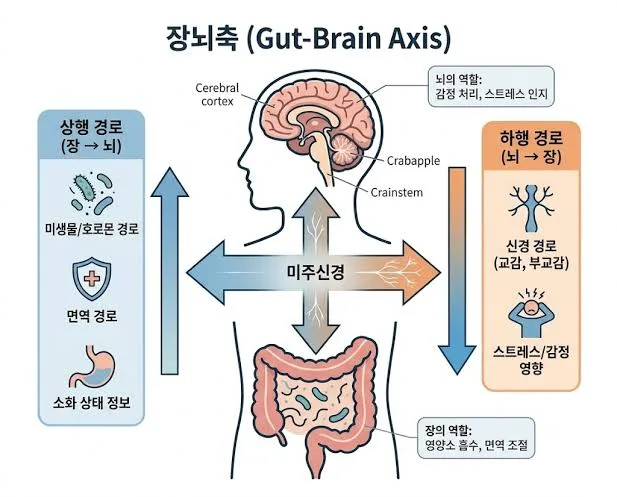
Pathways of interaction between the gut and the brain. Source: Neuromuscular Relief Research Institute
[Gut lining breaks down / glutamine deficiency]
         ↓
[Leaky gut (LPS endotoxins get in)]
         ↓
[Blood carries them to the blood-brain barrier (BBB)]
         ↓
[Microglia go into M1 overdrive & brain inflammation]- The gut lining breaks down: ultra-processed foods, refined sugar, stress, and a lack of glutamine, the main fuel for the cells lining the gut, loosen the tight junctions of the intestinal lining.
- Toxins enter the bloodstream: through the loosened barrier, endotoxins (LPS) from harmful bacteria and undigested food particles seep into the blood.
- The blood-brain barrier is irritated: toxins and immune cytokines carried in the blood stimulate the astrocytes of the BBB, the brain’s line of defense, making it more permeable.
- Glial cells go into overdrive: when microglia detect inflammatory signals, the NLRP3 inflammasome and the NF-κB switch inside them turn on, and they shift into “attack mode” (the M1 type). They then release inflammatory cytokines (TNF-α, IL-1β) that damage neural circuits.
Note: the main fuel for the cells of the gut lining is glutamine. Under stress or chronic inflammation, glutamine consumption rises sharply, leaving the intestinal barrier prone to damage, which soon leads to a leaky gut and brain inflammation.
6. Brain aging and the loss of the “reset point” (microglial priming)
As we age or remain exposed to chronic inflammation for a long time, microglia fall into a state of being always slightly activated, called microglial priming.
In this state, even very small stresses or a mild cold virus can send microglia into overdrive and trigger brain inflammation. The reason forgetfulness worsens and we become more vulnerable to stress with age is this loss of the brain’s immune reset point, and correcting it is the key to keeping the brain young.
7. Five key nutrients that lower brain inflammation
To shift microglia from the attacking type (M1) to the calming type (M2) that regenerates and protects cells, anti-inflammatory nutrition at the cellular level is essential.
① Glutamine (L-glutamine)
As the main energy source for the cells lining the gut, it rebuilds loosened tight junctions and fundamentally blocks the source of brain inflammation caused by a leaky gut. In the brain, it also serves as the raw material that allows glutamate, an excitotoxic substance, to cycle safely.
- Recommended foods: bone broth, eggs, beef, chicken, spinach, L-glutamine powder.
② Omega-3 fatty acids (EPA and DHA)
They act directly on microglial cell membranes to suppress inflammatory cytokines. DHA makes brain cell membranes more flexible, and EPA lowers inflammatory responses in the body.
- Recommended foods: salmon, mackerel, Spanish mackerel, perilla oil, rTG omega-3.
③ Short-chain fatty acids (SCFAs, butyrate)
Butyrate, produced when beneficial gut bacteria ferment dietary fiber, seals the gut lining tightly and travels to the brain to directly suppress microglial overactivation.
- Recommended foods: whole grains (oats, brown rice), asparagus, bananas, ghee.
④ Plant polyphenols (curcumin, resveratrol, quercetin)
These powerful antioxidants strengthen the BBB-protecting function of astrocytes and block the NF-κB circuit, the inflammatory switch inside microglia.
- Recommended foods: turmeric, blueberries, onions, green tea.
⑤ Probiotics and prebiotics
They restore the gut’s microbial ecosystem and help the smooth production of serotonin and GABA (a calming neurotransmitter) that reach the brain.
- Recommended foods: traditional fermented foods (kimchi, doenjang), unsweetened yogurt, synbiotics.
8. Summary of how the key nutrients work
| Nutrient | Main target | Effect on brain and gut immunity |
|---|---|---|
| Glutamine | Gut lining cells & astrocytes | Repairs gut junctions (blocks leaky gut), eases glutamate excitotoxicity |
| Omega-3 | Microglia | Shifts microglia from M1 (attack) to M2 (calming and regenerating) |
| Short-chain fatty acids | Gut lining & brain immunity | Blocks leaky gut, reduces chronic inflammatory signals in the brain |
| Polyphenols | Astrocytes | Strengthens the blood-brain barrier, blocks the NF-κB inflammatory switch |
| Probiotics | Gut microbiome | Promotes serotonin and GABA production through the gut-brain axis |
9. A three-step “anti-inflammatory diet” to switch off brain inflammation
Step 1: Cut out inflammatory foods that attack the gut
- Refined sugar and high-fructose syrup: spike blood sugar and feed harmful gut bacteria.
- Ultra-processed foods and trans fats: destroy the cells of the gut lining and cause a leaky gut.
Step 2: Build an anti-inflammatory table every day
- Vegetables and olive oil: use leafy greens rich in phytochemicals and extra-virgin olive oil at every meal.
- Glutamine and protein: get the L-glutamine and essential amino acids needed to regenerate the gut and brain from bone broth, eggs, and fish.
Step 3: Activate cellular autophagy
- 16:8 intermittent fasting: keeping a 12- to 16-hour fast after dinner activates AMPK, the brain’s energy-sensing protein, and suppresses mTOR, triggering autophagy, in which glial cells clear diseased structures and waste from the brain.
- Chew slowly: chewing food slowly, 30 times or more, sends signals to the brain through the vagus nerve and releases stress-relieving hormones.
10. A self-check for brain inflammation
If three or more of the items below apply to you, you may suspect overactivated microglia and inflammation in the brain.
- Even after enough sleep (7 hours or more), my head feels foggy in the morning.
- I feel especially drowsy or mentally tired (brain fog) after meals.
- My gut health is unstable: frequent indigestion or gas.
- Lately, even small stresses suddenly make me very irritable or anxious.
- I often crave sweets (refined sugar) or highly processed foods.
- My focus drops quickly, and a lack of emotional motivation persists.
11. Five everyday habits to reset your brain
| Area | How to practice | Effect on brain and gut immunity |
|---|---|---|
| Sleep | 7 to 8 hours of deep sleep (no smartphone before bed) | The glymphatic system runs during sleep, clearing beta amyloid and other waste |
| Diet | Anti-inflammatory diet; manage glutamine and refined sugar | Protects the gut lining, prevents leaky gut, and keeps microglia from going into overdrive |
| Breathing | 4-6 belly breathing (4-second inhale, 6-second exhale) | Stimulates the vagus nerve, blocking stress hormones and inflammatory signals in the brain |
| Exercise | 20 to 30 minutes of moderate aerobic exercise a day | Promotes BDNF release, supporting brain cell regeneration and cognition |
| Light | Get outdoor sunlight within 30 minutes of waking | Normalizes the brain’s circadian rhythm and activates mitochondrial function in cells |
12. Conclusion: toward a clearer-headed life
Unexplained mental fatigue and brain fog are not the result of weak willpower. They are a kind of “SOS signal” from glial cells after the defenses of the gut and brain have broken down.
The way to regain a clear mind and sharp focus is simple. Instead of relying on caffeine or stimulants that force the brain awake, you need to send signals that repair the gut lining and switch off chronic inflammation in the brain.
Starting today, eat a diet rich in glutamine, cut back on refined sugar, and get 7 hours of deep sleep. Small changes in eating habits and lifestyle will revive your gut, calm your glial cells, and bring back days that shine clearly again.
References
- Iliff, J. J., et al. (2012). A paravascular pathway facilitates CSF flow through the brain parenchyma and the clearance of interstitial solutes, including amyloid β. Science Translational Medicine, 4(147), 147ra111. (The glymphatic system and the clearance of waste during sleep)
- Cryan, J. F., & Dinan, T. G. (2012). Mind-altering microorganisms: the impact of the gut microbiota on brain and behaviour. Nature Reviews Neuroscience, 13(10), 701–712. (The gut-brain axis and the effects of gut microbes on the brain’s neuroimmune system)
- Prinzen, M., & Priller, J. (2014). Microglia and brain inflammation in neurodegenerative diseases. Nature Neuroscience, 17(11), 1542–1553. (Microglial M1/M2 phenotype switching and the mechanisms of chronic brain inflammation)
- Rao, R., & Samak, G. (2012). Role of glutamine in protection of intestinal epithelial tight junctions. Journal of Epithelial Biology and Pharmacology, 5(1), 47–54. (How L-glutamine protects intestinal epithelial cells and tight-junction proteins)
Copyright & Disclaimer
[Copyright] The copyright of this work belongs to the author. Unauthorized reproduction, redistribution, or adaptation for commercial purposes is prohibited. When sharing for non-commercial purposes, please clearly credit the source and link to the original article.
[Medical caution and disclaimer] This content is general information based on research in neuroscience and nutritional biochemistry and cannot replace professional medical diagnosis, opinion, or treatment. Before treating a specific condition or taking supplements (such as glutamine), be sure to consult a medical professional or pharmacist.
Was this article helpful?
Your choice is saved only in this browser and is never sent anywhere.