You stopped at last time.
The story in four panels
Immersion starts with space
-
1The problem
A smartphone with notifications piling up At home, but my mind wanders…
Sometimes you're home but your mind is somewhere else entirely.
-
2How it works
A light bulb glowing above a person deep in thought The immersed brain
When immersed, the brain releases dopamine and sinks deeply into one thing.
-
3What to do
An open book and a pen A small space of my own
Create a space of your own filled with things you love.
-
4The change
A brain with an even wave and a slowly beating heart Space shapes who I am
Space affects immersion: that's the message of the exhibition and talks.
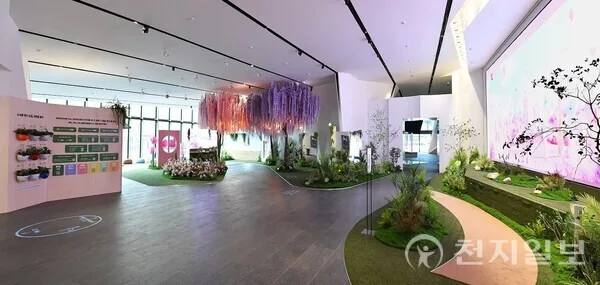
There are times when you’re at home but your mind is elsewhere, and other times when you’re completely absorbed at a single small desk. Lately, the theme of “immersion” has met brain science and is drawing attention in an unexpected place.
Filling the gaps in your home with your tastes, and your tastes with immersion
Raemian Gallery, run by Samsung C&T, is holding an exhibition called “A Part of Home,” and the fact that a construction company put together a cultural exhibition itself is unusual. It’s billed as an immersive exhibition spotlighting the personal spaces of taste hidden inside our homes.
But this isn’t an exhibition you just look around and leave. It’s followed by talks from psychologist Professor Kim Kyung-il in September and brain scientist Professor Jeong Jae-seung in October, so let’s unpack, one by one, why this combination is special.
What’s different about Raemian Gallery’s “A Part of Home”?
“A Part of Home” is, as the name says, an exhibition about part of the space we call home: the leftover nooks we never got around to caring about. It reportedly shows how to fill overlooked gaps, such as a corner of the living room, the space under the stairs or a spot by the window, with your own tastes.
According to the exhibition’s introduction, it aims to spotlight “your own spaces of taste hidden inside the home.” It’s a point worth noting for anyone interested in interiors or making use of space.
What’s interesting is that a construction company planned it directly. Cultural exhibitions are usually held by museums or galleries, so a company that builds apartments creating an immersive exhibition about space and taste is itself seen as a new kind of venture.
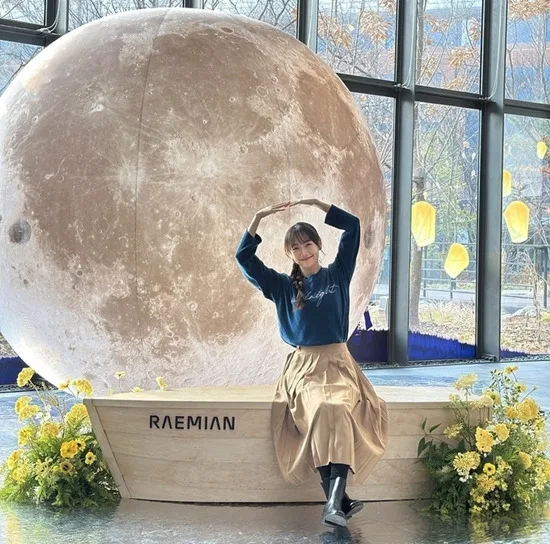
Who is Professor Kim Kyung-il, the speaker in September?
Professor Kim Kyung-il, who gives the September talk, is a scholar who teaches cognitive psychology in the Department of Psychology at Ajou University. He’s also a familiar face to the public from appearing on many TV programs and explaining psychology in an easy, entertaining way.
At this exhibition he’ll speak on “The power of the small spaces that make us.” As the title suggests, the talk looks set to cover how the small spaces we spend time in affect our identity and habits.
A psychologist talking about space may seem like an odd pairing, but environment, immersion and habit formation are in fact closely connected topics. Depending on the space you’re in, you may focus easily or get distracted easily.
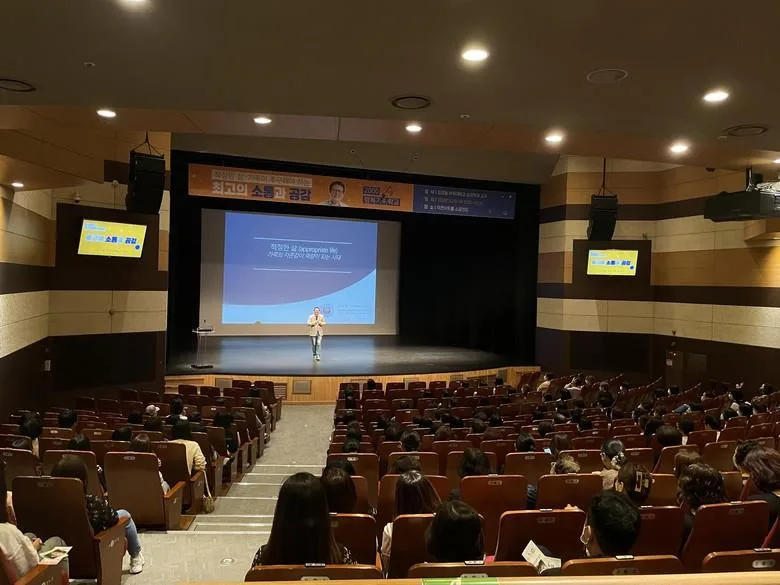
In October, brain scientist Professor Jeong Jae-seung takes the stage
In October, brain scientist Professor Jeong Jae-seung takes the baton. Professor Jeong researches bio and brain engineering at KAIST and is well known for books and broadcasts that make difficult brain science easy for the public to understand.
His talk will reportedly explore happy spaces from a brain-science perspective, and the spaces the brain prefers. Rather than simple interior tips, it looks set to explain, from the standpoint of the brain’s responses, why some spaces put the mind at ease and others don’t.
The very structure, a psychologist and a brain scientist giving talks a month apart at the same exhibition, gives the impression that this isn’t just for show.
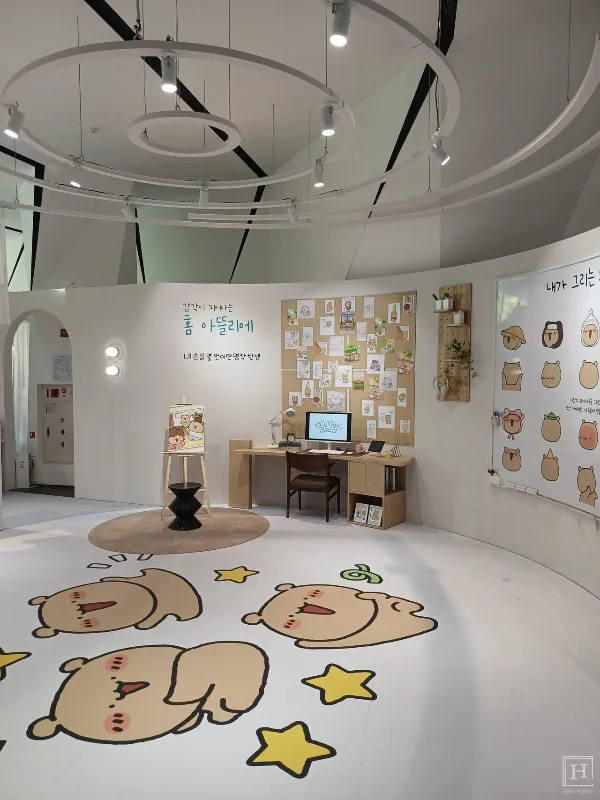
What happens in the brain when we’re immersed?
So how does the brain actually respond in a state of immersion? It’s commonly known that in a flow state, activity drops in the brain areas responsible for stray thoughts and energy concentrates in the areas related to the task at hand.
It’s also widely explained that neurotransmitters such as dopamine are involved in this process, lifting focus and satisfaction at the same time. We’ve all had the experience of getting so absorbed in something that we lose track of time; at that moment, quite a busy set of changes is happening in the brain.
Space affecting immersion follows the same logic. In a space arranged to suit you, rather than a visually cluttered one, the brain receives fewer unnecessary stimuli and slips more easily into what you want to do. That may be why this exhibition and these talks tie space and immersion together.
What to check before applying and visiting
If the exhibition and talks have piqued your interest, you’re probably wondering how to apply. Programs with limited capacity, like talks, usually take advance applications and close on a first-come, first-served basis. If you put it off, the seats may fill up, so if you’re interested, it’s best to hurry.
For details such as the exact application schedule and method and the exhibition’s opening hours, Raemian Gallery’s official channels are the most accurate source. Application conditions for cultural programs like this can change from period to period, so it helps to keep an eye on announcements.
The exhibition itself can often be viewed without a reservation, but programs with limited seating, like the talks, are likely to have a separate application process. Checking whether you need to apply before you go can save you a wasted trip.

Why an exhibition made by a construction company is special
To recap, what makes this exhibition interesting comes back to the point that “a construction company made it.” A company that builds apartments going beyond interior promotion to bring in the academic fields of psychology and brain science to create content also suggests that consumers today see space not merely as a place to live but as a matter of taste and immersion.
Compared with other brand exhibitions, too, inviting a psychologist and a brain scientist back to back, a month apart, is rare. In that sense, this exhibition has put its effort into explaining rather than just showing.
If you’d like to revisit the emotional theme of immersion in the scientific language of brain science, this exhibition and these talks are worth keeping an eye on.
Both the familiar space of home and the familiar feeling of immersion can look new when you see them through the lens of brain science. This fall, it might be nice to experience that unfamiliar perspective at Raemian Gallery.
If you’d like to keep hearing about immersion and brain science, be sure to follow along!
Raemian Gallery
17 Chungmin-ro, Songpa-gu, Seoul, Raemian Gallery
Was this article helpful?
Your choice is saved only in this browser and is never sent anywhere.