You stopped at last time.
The story in four panels
How the kindness you give finds its way back
-
1The situation
It feels like I'm the only one losing out…
A day when giving way and helping out feel like a loss. A book called The Selfish Gene seems to say that feeling is right.
-
2How it works
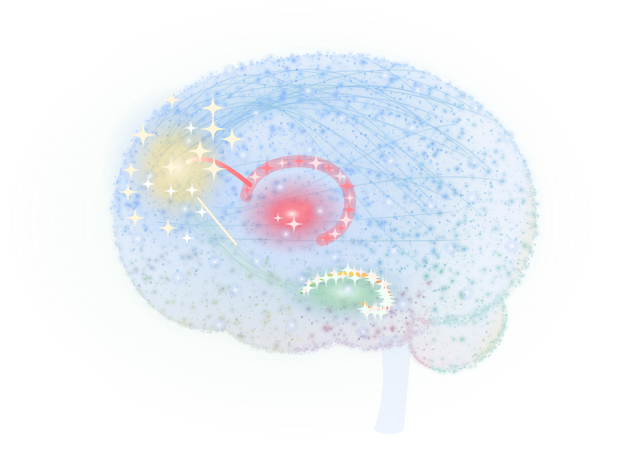
When I help, my brain lights up
When people chose to donate, the brain's reward circuit lit up in the same place as when they received money. (PNAS, 2006)
-
3What to do
Give first, forgive fast
Cooperate first, draw a line at betrayal, forgive when the other side comes back. That is Tit for Tat, the strategy that won the most in long relationships.
-
4The change
The days I gave were happier
People who spent money on others were happier than those who spent it on themselves. (Science, 2008)
The comic in words
- Panel 1 · The situation PictureA tired person slumped at a desk Speech bubble“It feels like I'm the only one losing out…”
- Panel 2 · How it works PictureTwo neurons joining Speech bubble“When I help, my brain lights up”
- Panel 3 · What to do PictureA person jogging lightly Speech bubble“Give first, forgive fast”
- Panel 4 · The change PictureSmall repeated steps up a staircase towards a goal flag Speech bubble“The days I gave were happier”
📌 Key takeaways
The short answer: We help others precisely because genes are “selfish.” Helping family helps copies of our own genes in another body, and cooperating with others pays off in the long run. In fact, people who spent money on others were happier than those who spent it on themselves (Science, 2008), and the way we treat others came back to us on three levels: genes, relationships and the brain.
- 🧬 In Richard Dawkins’s The Selfish Gene (1976), “selfish” is a metaphor. It means the genes that left more copies of themselves are the ones that survived, not that people should live selfishly.
- 👨👩👧 Kin selection: a brother or sister has a one-in-two chance of sharing any given gene with you. So, seen through the eyes of a gene, helping family means helping “you in another body” (Hamilton, 1964).
- 🤝 Tit for Tat: a simple strategy that cooperates first and then copies what the other side did scored highest in a computer tournament (Science, 1981). The way you treat others comes straight back to you.
- 🧠 The brain: deciding to donate switched on the reward circuit (PNAS, 2006), and watching a loved one in pain switched on the same brain areas that respond to our own pain (Science, 2004).
- ⚖️ Still, the research does not declare that “loving others is the same as loving yourself.” What it shows is that the way we treat others comes back as our own happiness and health. This post stays within that line.
💬 The day it felt like I was losing out
Sometimes you hold the elevator door and the person walks past without a word of thanks. Sometimes a colleague presents your idea in a meeting as if it were their own. In moments like these a small voice speaks up: “Being nice is a losing game. Everyone just looks out for themselves.”
There is a book that seems to back that voice up. Its title is literally The Selfish Gene. But read it to the end and something odd happens. It turns out to be a book that explains how life built from selfish genes comes to risk itself for family, share food with strangers, and reach out first in relationships that last.
This post sets that book next to studies published in Science and PNAS and follows a single question: Is the way we treat others, in the end, the way we treat ourselves?
📖 What kind of book is The Selfish Gene?
The body as a “survival machine” that carries genes
Dawkins asks us to change how we look at life. Natural selection does not work for the good of the species or the group. What survives across generations is the gene, and our bodies are survival machines that genes ride in to cross into the next generation.
Think of a parcel. The box (the body) is used for a few decades and thrown away, but the blueprint inside (the gene) is copied into the next box. Blueprints that copy well multiply; ones that don’t disappear.
“Selfish” describes an outcome, not a mind
This is where many people misread the book. Genes have no mind and no intentions. When Dawkins says “selfish,” he means “the ones that ended up leaving more copies of themselves are the ones that survived.” In chapter 1 he draws the line himself: he is not advocating a morality based on evolution, only describing how things evolved. And he adds: “Let us try to teach generosity and altruism, because we are born selfish.”
So the book is not permission to live selfishly. It is closer to a map of the nature we start from.
🔬 Deep Dive: How does the way we treat others come back to us?
Layer 1, genes: Is helping family helping yourself in another body?
In 1964 the British biologist William Hamilton solved an old puzzle. Why do worker bees raise the queen’s young instead of their own? Why does a bird risk its life to give an alarm call that saves other birds?
Hamilton’s answer was kin selection. Because you and your siblings inherited your genes from the same parents, the chance that you share any given gene is one half. For first cousins it is one eighth. So, through a gene’s eyes, helping a sibling means helping copies of your own genes that live in another body. A helping behavior can evolve when the benefit to the one helped, multiplied by how closely the two are related, outweighs the cost to the helper. This is known as Hamilton’s rule.
At this layer, “helping others is helping yourself” is not a metaphor but a fairly precise description. The catch is that it applies to blood relatives.
Layer 2, relationships: Does kindness come back from people who aren’t family?
What about people who aren’t family? In 1971 Robert Trivers proposed reciprocal altruism: I help you today, you help me tomorrow. Dawkins puts it as “you scratch my back, I’ll scratch yours.” The problem is cheats who take without giving back. That is why Dawkins says cooperation only holds up when there is a grudger strategy that remembers cheats and stops helping them.
The person who tested this idea was the political scientist Robert Axelrod. He invited scholars to submit computer programs to play the “prisoner’s dilemma” against each other. If both cooperate, both gain a little; if only one betrays, the betrayer gains a lot; if both betray, both lose. Plenty of clever, complicated strategies were entered, but the highest score went to a strategy only a few lines long: Tit for Tat (Axelrod & Hamilton, Science, 1981).
Tit for Tat has just two rules.
- Cooperate on the first move.
- After that, do whatever the other side did on the previous move.
Axelrod summed up what the successful strategies had in common. They never betrayed first (nice), struck back when betrayed (retaliatory), forgave as soon as the other side cooperated again (forgiving), and were simple enough for others to read (clear). Dawkins wrote a new chapter on this for the second edition and gave it the title “Nice guys finish first.”
There is one important condition. The relationship has to continue rather than end after one round. Axelrod called this the shadow of the future. The more likely you are to meet again, the more likely the way you treat someone today will come back to you tomorrow. Tit for Tat is literally a mirror: what you hand out is reflected straight back.
Layer 3, the brain: What does my brain feel when I help someone?
Some moments can’t be fully explained by genetic or relationship arithmetic: donating anonymously when nobody is watching, or giving directions to a traveler you will never see again. What happens in the brain then?
The reward circuit that switches on when we help. A research team at the US National Institutes of Health (NIH) asked participants in an fMRI scanner to choose between keeping money and donating it to charity. Choosing to donate switched on the brain’s reward circuit, the ventral tegmental area and the striatum. It was the very same circuit that switches on when we receive money ourselves (Moll et al., PNAS, 2006). In the brain, giving was traveling the same road as receiving.
A brain that responds even to money given under compulsion. A team at the University of Oregon ran an experiment that sent part of each participant’s money to a food bank. Reward areas responded even when the transfer was mandatory, like a tax, and responded more strongly when participants chose it themselves (Harbaugh et al., Science, 2007). The researchers read this as evidence that people take satisfaction in others doing well, and that the warm feeling of giving by choice adds to it.
A brain that processes another’s pain like its own. Tania Singer’s team at University College London had one partner of a couple lie in an fMRI scanner while the other, right beside them, received mild electric shocks to the hand. When participants saw a signal that their loved one was in pain, the anterior insula and anterior cingulate cortex, areas that respond when we ourselves are in pain, switched on too. The areas that handle bodily sensation did not (Singer et al., Science, 2004). The brain could tell the other person’s pain apart as a “sensation,” but as “the hurt of the heart,” it processed it as its own.
So were the givers really happier?
Some studies have checked whether these brain responses carry over into happiness in real life.
A team from the University of British Columbia and Harvard Business School handed participants an envelope with 5 or 20 dollars in the morning. Half were told to spend it on themselves by 5 p.m.; the other half were told to spend it on someone else. When their happiness was measured that evening, those who had spent on others were happier. Whether they had received 5 or 20 dollars made no difference (Dunn, Aknin & Norton, Science, 2008). In a survey of 632 Americans reported in the same paper, the more people spent on others, the happier they were, while spending on themselves was unrelated to happiness.
This was not a one-country story either. A follow-up study analyzing Gallup survey data from 136 countries found that people who had donated in the past month tended to report higher life satisfaction in 120 of those countries, rich and poor alike (Aknin et al., JPSP, 2013).
A similar pattern showed up in health. A study that followed 423 older American couples for five years found that people who gave help to family, neighbors and friends had a lower risk of dying during the study than those who did not. Interestingly, receiving help was not linked to mortality (Brown et al., Psychological Science, 2003). Because this was an observational study, though, we cannot conclude that helping lengthened lives. People who were healthier to begin with may simply have helped more.
How far does my kindness spread?
Near the end of the book, Dawkins introduces a second replicator besides the gene: the meme, a unit of culture such as a phrase, a habit or an attitude that is copied from person to person. Does the kindness we show others spread like a meme?
A team from Harvard and the University of California had participants play a game in which they contributed money to a shared pot, with new partners each round. One dollar contributed early on led the people who had played with that person to give more in the next round, and the effect carried on to the people they played with after that. It spread up to three degrees of separation, and by the end of the experiment that first dollar had grown to about three dollars in total contributions from others (Fowler & Christakis, PNAS, 2010).
The way you treat someone today does not end with that person. It flows on to people you will never meet, and in the community it changes, you go on living too.
Is loving others the same as loving yourself?
That brings us back to the question we started with. Is loving others the same as loving yourself?
To be honest, neither the book nor the research proves that sentence as it stands. Dawkins clearly warned against deriving morals from nature, and the studies above go as far as “generosity comes back as our own happiness and health.” The reverse direction, “people who are kind to themselves are kinder to others,” has weaker support. Kristin Neff, who studies self-compassion, compared how warmly people treat themselves with their empathy and forgiveness toward others across three groups. Among college students the link was weak or nearly absent; it was clearer among community adults and people who practice meditation (Neff & Pommier, Self and Identity, 2013). How we treat ourselves and how we treat others are connected, but they don’t become the same on their own. They grow closer when we practice both together.
So this post sums up the theme like this: the way you treat others comes back to you. At the level of genes, it comes back to the “you” inside your family; at the level of relationships, as the other person’s behavior reflected back like a mirror; and at the level of the brain, through the circuits of reward and empathy.
| Question | What the book says | What research showed | Verdict |
|---|---|---|---|
| Is helping family helping yourself? | It explains this with kin selection. Your family carries copies of your genes. | It rests on Hamilton’s theory (1964) and has been confirmed in many animal studies. | It holds at the level of genes. |
| Does the way you treat others come back to you? | It explains this with Tit for Tat and reciprocal altruism. | In repeated relationships, the strategy that cooperated first won the most (Science, 1981). | It holds when the relationship continues. |
| Does my brain get a reward when I help? | The book does not address this directly. | The reward circuit switched on during donation (PNAS, 2006; Science, 2007). | It holds at the level of the brain. |
| Does giving make us happier? | The book does not address this directly. | Money spent on others raised happiness, and the same tendency appeared in 120 of 136 countries. | It largely holds. |
| Is loving others the same as loving yourself? | The book warns against deriving morals from nature. | The link between self-compassion and empathy for others varied by group. | We cannot say they are the same. They grow closer with practice. |
If you’re curious how the words and attitudes we use get etched into the brain, read One Word Rewires the Brain, and if you want to know about the strength to get back up after a fall, read Can You Build Resilience? as well.
✅ The fix: Three steps to change how you treat others
Step 1: Give first, Tit for Tat’s opening move
Make your first move in a relationship a cooperative one. Half of the reason Tit for Tat won is that it never betrayed first. It doesn’t need to be grand. In the study, the amount that made a difference was 5 dollars.
- Pick one person you’ll meet today, greet them first and offer one small bit of help.
- This week, make one small purchase for someone else, like a coffee or a snack.
- Set up your environment: write “share once this week” in your wallet or phone notes. Set it as a Monday-morning reminder so it comes to mind without willpower.
Step 2: Forgive quickly, but keep your boundaries clear
Tit for Tat is not simply a nice strategy. It strikes back once at betrayal and forgives as soon as the other side returns. Living kindly and being used are different things. Dawkins’s “grudger” protected cooperation precisely because it remembered the cheats.
- If someone is weighing on your mind, be ready to accept them when they reach out. A one-line text asking how they are is enough.
- In a relationship where you only ever give, practice saying, “This is as far as I can go.”
- If-then plan: “If something hurts my feelings, I won’t decide that night; I’ll think it over again the next day.” This keeps you from cutting people off in anger.
Step 3: Lengthen the shadow of the future, starting with how you talk to yourself
Cooperation grows when we meet again. And how we treat others and how we treat ourselves grow closer when we practice both together.
- Set up regular plans with people you see often (a weekly walk, a monthly meal) so the relationship becomes a long series of rounds, not a single transaction.
- When you make a mistake, talk to yourself the way you’d talk to a friend: “That happens. Let’s try it this way next time.”
- At the end of the day, write down one kindness you gave today. It’s time to recognize the meme you spread.
| Step | Key action | Evidence | Environment cue |
|---|---|---|---|
| Step 1: Give first | Greet people first and make a small gesture or small purchase for someone else. | People who spent 5 dollars on others were happier (Science, 2008). | Set a Monday-morning reminder: “share once this week.” |
| Step 2: Forgive, with boundaries | Welcome people back right away when they return, and draw a line in one-sided relationships that repeat. | Tit for Tat, nice, retaliatory and forgiving, won the most (Science, 1981). | Make an if-then plan: “If I’m hurt, I’ll decide the next day.” |
| Step 3: The shadow of the future | Create regular meetups, and speak to yourself like a friend. | Kindness spread up to three degrees of separation (PNAS, 2010). | Before bed, note “one kindness I gave today.” |
Conclusion
The title The Selfish Gene sounds cold, but the story the book tells is surprisingly warm. Over billions of years, the most durable strategy that selfish genes found turned out to be caring for family, reaching out first and forgiving quickly. And our brains turned out to be built to feel joy through the same circuit when we give as when we receive, and to feel a loved one’s pain as our own.
Dawkins ends the book this way: we, alone on earth, can rebel against the tyranny of the selfish replicators. Understanding our nature is not an excuse but a starting point. The small kindness you offered someone today doesn’t end with them; it flows on as far as three degrees of separation and, in the end, changes the world you live in a little.
Tonight, fall asleep thinking of one greeting you’ll offer first tomorrow morning. From the day you realize that the way you treat others comes back to you, tomorrow becomes a day you look forward to a little more.
🙋 FAQ
Q1. Is The Selfish Gene a book saying people should live selfishly?
No. In chapter 1 Dawkins states clearly, “I am not advocating a morality based on evolution.” “Selfish” is a metaphor for the outcome that genes leaving more copies of themselves are the ones that survived. If anything, the book explains how selfish genes give rise to family love and cooperation, and says that because we are born selfish, we should teach generosity and altruism.
Q2. If I’m nice, won’t I just get used?
A strategy that is unconditionally nice really does get exploited by cheats. Tit for Tat, which won Axelrod’s tournament, cooperated first, but struck back once when betrayed and cooperated again when the other side returned. Be kind first, but draw a line in one-sided relationships that keep repeating. That is the most durable approach the book and the research point to together.
📚 References
- Dawkins, R. (1976; 2nd ed. 1989; 30th anniversary ed. 2006). The Selfish Gene. Oxford University Press.
- Hamilton, W. D. (1964). The genetical evolution of social behaviour. I & II. Journal of Theoretical Biology, 7(1), 1–52. doi:10.1016/0022-5193(64)90039-6
- Trivers, R. L. (1971). The evolution of reciprocal altruism. The Quarterly Review of Biology, 46(1), 35–57. doi:10.1086/406755
- Axelrod, R., & Hamilton, W. D. (1981). The evolution of cooperation. Science, 211(4489), 1390–1396. doi:10.1126/science.7466396
- Nowak, M. A. (2006). Five rules for the evolution of cooperation. Science, 314(5805), 1560–1563. doi:10.1126/science.1133755
- Moll, J., Krueger, F., Zahn, R., Pardini, M., de Oliveira-Souza, R., & Grafman, J. (2006). Human fronto–mesolimbic networks guide decisions about charitable donation. PNAS, 103(42), 15623–15628. doi:10.1073/pnas.0604475103
- Harbaugh, W. T., Mayr, U., & Burghart, D. R. (2007). Neural responses to taxation and voluntary giving reveal motives for charitable donations. Science, 316(5831), 1622–1625. doi:10.1126/science.1140738
- Singer, T., Seymour, B., O’Doherty, J., Kaube, H., Dolan, R. J., & Frith, C. D. (2004). Empathy for pain involves the affective but not sensory components of pain. Science, 303(5661), 1157–1162. doi:10.1126/science.1093535
- Dunn, E. W., Aknin, L. B., & Norton, M. I. (2008). Spending money on others promotes happiness. Science, 319(5870), 1687–1688. doi:10.1126/science.1150952
- Aknin, L. B., Barrington-Leigh, C. P., Dunn, E. W., Helliwell, J. F., Burns, J., Biswas-Diener, R., Kemeza, I., Nyende, P., Ashton-James, C. E., & Norton, M. I. (2013). Prosocial spending and well-being: Cross-cultural evidence for a psychological universal. Journal of Personality and Social Psychology, 104(4), 635–652.
- Brown, S. L., Nesse, R. M., Vinokur, A. D., & Smith, D. M. (2003). Providing social support may be more beneficial than receiving it: Results from a prospective study of mortality. Psychological Science, 14(4), 320–327.
- Fowler, J. H., & Christakis, N. A. (2010). Cooperative behavior cascades in human social networks. PNAS, 107(12), 5334–5338. doi:10.1073/pnas.0913149107
- Neff, K. D., & Pommier, E. (2013). The relationship between self-compassion and other-focused concern among college undergraduates, community adults, and practicing meditators. Self and Identity, 12(2), 160–176. doi:10.1080/15298868.2011.649546
💭 A question for you
Has a kindness you offered first ever come back to you in an unexpected way? Or was there a moment when reaching out first felt hard? Share it in the comments; your story might reach someone else three degrees away.
⚠️ Disclaimer
This post is general information based on a book and academic research, and it does not replace medical or psychological diagnosis or treatment. If you face recurring difficulties in relationships or significant emotional distress, please talk to a professional. Some of the studies cited are observational, so they do not establish cause and effect.
Information current as of . Newer research may change these conclusions.
Was this article helpful?
Your choice is saved only in this browser and is never sent anywhere.