You stopped at last time.
The story in four panels
Reset the reward circuit with sweat
-
1The problem
A smartphone with notifications piling up I'll cut back tomorrow…
Phones, late-night snacks. What keeps repeating despite your vows isn't willpower; it's neural circuitry.
-
2How it works
A loop from cue to action to reward The dopamine loop
The reward circuit of the nucleus accumbens and ventral tegmental area remembers and repeats intense behavior.
-
3What to do
A person running lightly with motion lines Run instead
Link running to the same trigger for a healthy reward: the runner's high.
-
4The change
A staircase climbed step by step with a flag at the top Write down small wins
Recording micro-successes makes the new circuit stronger.
Every night we vow, “Starting tomorrow I’ll cut back on my phone” or “No more late-night snacks,” and the next day we repeat the same behavior without fail. We usually blame a “lack of willpower,” but this is really not a problem of will; it’s a problem of the brain’s neurocircuitry.
The most powerful, scientific way to break a highly addictive bad habit and healthily reset the brain’s reward circuit is none other than “aerobic exercise that makes you sweat (running).”
To be honest, I finish work at 10 p.m. and get home at 11. I wasn’t particularly hungry, but I’d feel like eating something, and eating every night meant I gained weight and woke up the next morning with an upset stomach. So when the urge to eat hit, I started pulling out that puzzle piece and fitting in a different one: running.
Amazingly, on the days I came back from a run, the craving had vanished completely.
Every day I ran instead of snacking, I didn’t think about snacks at all. I’d wanted to eat because I was worn out, and then I pushed myself even harder with a run, yet my body felt refreshed and the snack I’d been thinking about was gone. I figured this must be my brain’s reward circuit changing.
Let’s look at why.
1. The brain’s reward circuit and how dopamine works (the science)
The brain’s nucleus accumbens and ventral tegmental area (VTA) run the reward system for our behavior. When we get a pleasant stimulus, the neurotransmitter dopamine is released, and the brain tries to “remember and repeat” that behavior.
- The problem with overstimulating habits: watching Shorts and Reels, eating sweets and late-night snacking release excessive dopamine in an instant. But when excessive stimulation is repeated, the brain protects itself by reducing the number of dopamine receptors (D2 receptors). This is called “tolerance,” and in the end you fall into a vicious cycle of seeking ever stronger stimulation to get the same satisfaction.
- Why sweat (exercise) resets the reward circuit:
- BDNF (brain-derived neurotrophic factor) release: aerobic exercise promotes BDNF release. BDNF boosts brain cell growth and neuroplasticity, helping break existing neural connections hardened into bad habits and build new, healthy circuits.
- Normalizing dopamine receptors: exercise restores the sensitivity of blunted dopamine receptors, returning you to a normal state in which even small everyday stimuli feel satisfying.
- Strengthening the frontal lobe: exercise sends blood flow to the prefrontal cortex, the part of the brain in charge of reason, dramatically improving impulse control and self-restraint.
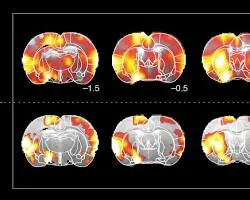 Top: a normal brain; bottom: a dopamine-addicted brain (details in the P.S.)
2. Three steps to reset the brain’s reward circuit
A bare instruction to “exercise” is hard to follow. Here is a step-by-step guide that takes the brain’s mechanisms into account.
Step 1: Set up a “replacement stimulus” pattern (trigger-response replacement)
If you simply try to hold back a bad habit, the brain feels intense stress. When the habit’s “trigger” comes, replace your response with putting on your running shoes instead of gritting your teeth.
- Example: when you crave a late-night snack after 9 p.m. or feel the pull to keep looking at your phone, don’t hold back; head out right away for 15 minutes of interval running or jogging.
Step 2: Bring on a “runner’s high”
For the brain to register exercise as a “real reward,” you need aerobic exercise that raises your heart rate above a certain level.
- How: run at 60 to 70% of your maximum heart rate for 20 to 30 minutes or more, until you sweat. As endorphins and endocannabinoids are released, the brain experiences deep pleasure and calm without drugs or junk food.
Step 3: Record “micro-successes”
You need to give the brain strong positive reinforcement right after exercise. Like me, posting your workout log to an Instagram account every day is a big motivator.
Using the Runday app to check your total distance since you started running, or your total distance for the month, is another good way to keep a record of your successes.
- How: right after a sweaty run, jot down in a notes app the bad habit you broke today and the workout you completed. The boost to self-esteem from “I controlled my impulse” works as a second dopamine reward.
3. Conclusion: a new start for the brain, beginning with sweat
Breaking a bad habit isn’t a battle to suppress desire; it’s the work of rewiring the brain’s circuits.
This evening, when your hand unconsciously reaches for a bad habit, try tying your shoelaces. Each drop of sweat on your forehead will be the surest key to resetting your brain and taking back control of your life.
P.S. Key differences in the brain images
Normal brain: The red and yellow areas in the image show dopamine D2 receptors working actively and binding with dopamine. The brain’s reward circuit functions normally, delivering enough satisfaction and self-regulation even from small everyday stimuli (good food, a sense of achievement, exercise and so on).
Brain under excessive dopamine stimulation or addiction: When intense, excessive dopamine release (drugs, Shorts and Reels, provocative media and so on) continues, the brain protects itself by reducing the number of dopamine D2 receptors (downregulation).
In the image you can see the red and yellow areas shrink sharply while the blue and dark areas grow. This signals a state of tolerance in which dopamine receptors have dulled, so you feel no satisfaction from ordinary stimuli and demand ever stronger stimulation.
Was this article helpful?
Your choice is saved only in this browser and is never sent anywhere.