You stopped at last time.
The story in four panels
Intermittent fasting after the holidays
-
1The problem
A plate with meat, an egg, and greens, with a fork and knife I ate again…
Over the holidays you eat at all hours, and the body never gets a break.
-
2How it works
Waste draining out beneath the brain like drops of water The body is cleaning up
During fasting hours, ketosis and autophagy kick in and insulin sensitivity improves.
-
3What to do
A loop from cue to action to reward Rest 16 hours, eat for 8
Set your eating window and chew well, eating vegetables → protein → carbs.
-
4The change
A sprout growing from the top of a brain I feel lighter!
Body fat drops and BDNF rises, which also helps cognitive function.
Did you have a good time with family over the 2023 Lunar New Year holiday? During the break with my parents, along with the good times, I came back with some bulking up I didn’t need. Holiday food is high in calories, but I think it’s mostly because I kept eating at all hours. Does your stomach feel heavy right now, or is your gut making not a hungry “growl” but an uneasy “gurgle”? Right now, your body needs to take a break through intermittent fasting. Done properly, intermittent fasting helps you not only lose weight but also look after your health, so please follow along.
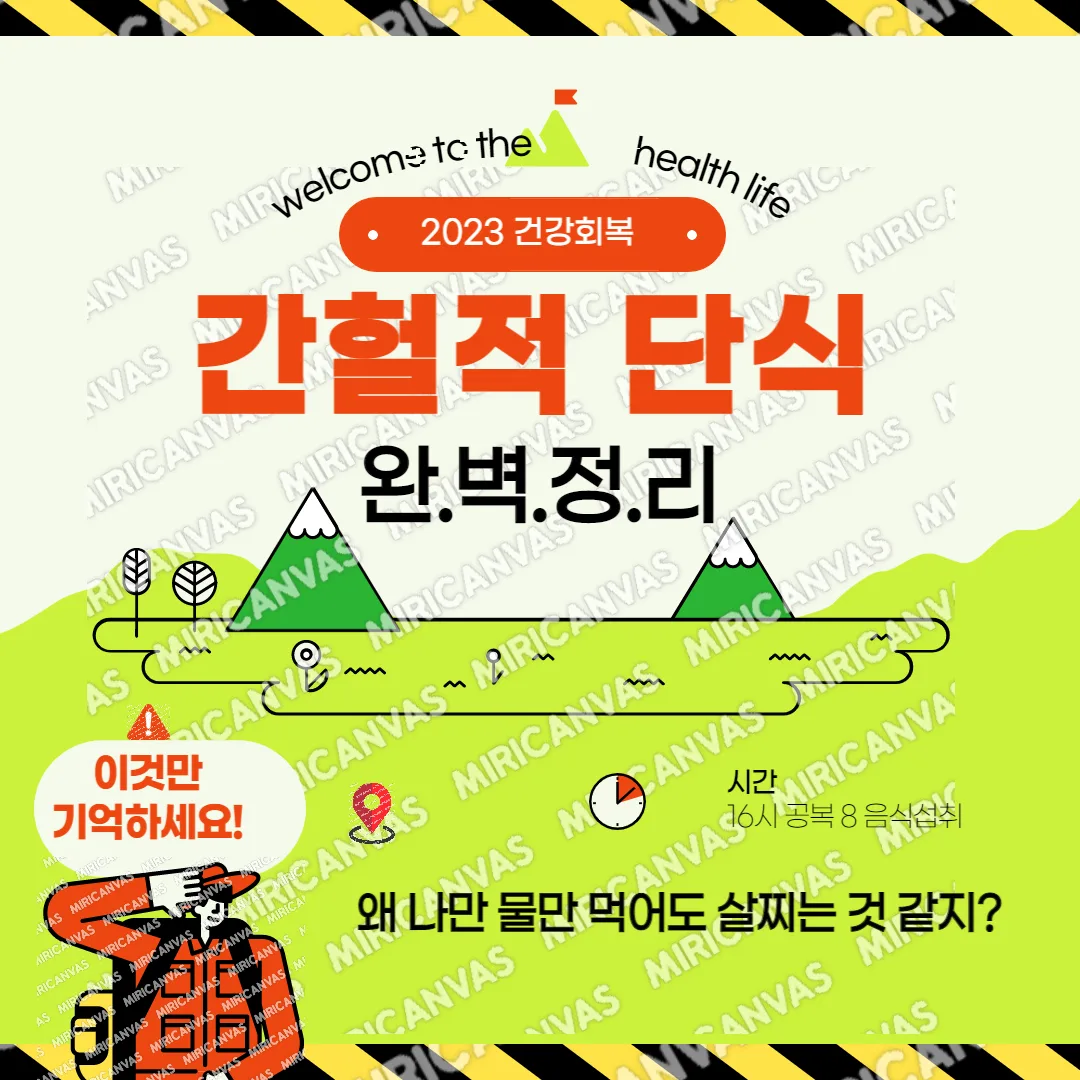 Intermittent fasting is the answer for people who feel they gain weight just drinking water
1. The effects of intermittent fasting
If you’re thinking, “Why do I gain weight just drinking water!”, you probably feel puffy and swollen from the holiday food or from overeating. When you keep eating without giving food time to digest, your body triggers false hunger, a state in which you want to eat more and more, and as foods that don’t go well together enter your organs and are digested all at once, gas builds up in the body. In the process, intestinal gas forms, and you’ve probably felt your belly bloat and your mind go sluggish from those toxins. The quick, effective way to clear out these toxins and lighten your body is intermittent fasting. Let’s use intermittent fasting to bring down the swelling and give ourselves time so that it doesn’t turn into fat.
Namuwiki, the Korean online encyclopedia, says intermittent fasting has the following effects:
- Rapid induction of ketosis
- Improved insulin sensitivity
- Reduced fat tissue
- Longer lifespan through changes in gene expression
- Self-cleaning through autophagy
- Antioxidant effects and reduced inflammation within cells
- Improved cognitive function through increased BDNF (brain-derived neurotrophic factor)
- Fewer cancer cells and precancerous cells
2. How to do intermittent fasting
The most common method of intermittent fasting is to fast for 16 hours and eat within an 8-hour window. Other methods include fasting for 18 hours and eating for 6, fasting for 20 hours and eating for 4, and, for those who find 16 hours of fasting hard, a good starter method of fasting for 12 hours and eating within the other 12.
If you begin with the 12:12 method and then move to 16 hours of fasting with an 8-hour eating window, you’ll definitely get both weight-loss and health benefits. According to the five stages of bodily change during fasting compiled by Dr. George F. Cahill Jr. of Harvard Medical School, stage 3, from 16 to 30 hours after a meal, is when the glycogen stored in the liver is running out and the body makes glucose from protein. Some people worry that using protein means losing muscle mass, but the body doesn’t take the protein we need; it uses aged cells. Simply put, it eats up old and sick cells that would have been thrown away as waste and recycles them, so this is a stage in which the body uses itself in a healthier way. This is called autophagy.
3. What you must follow during intermittent fasting
Eating only during a set window, as in 16:8 intermittent fasting, where you eat within 8 hours, can ultimately reduce body fat. But be careful not to binge during your eating window.
1) Take 20 to 30 minutes to eat, and chew very thoroughly
2) Eat in this order: vegetables, then protein, then carbohydrates
3) Stretch and exercise regularly
Going from three meals to two lowers your energy intake, which tends to lower your activity level too, so there’s a high chance of losing not only fat but also muscle. So keep up a regular exercise habit to make sure your body doesn’t lose muscle mass.
Was this article helpful?
Your choice is saved only in this browser and is never sent anywhere.